Can you tell us a bit more about your background?
I worked in a modern fine dining restaurant, where I was responsible for salads, desserts, and cold dishes. I prepared everything from beef tartare to chocolate tarts. It was fine dining with a modern twist, and it gave me a strong foundation in different aspects of the kitchen.
What inspired you to leave the US and come to Croatia to study culinary arts?
Adventure, mostly. It was my first time in Europe, and I wanted to experience something completely different. I also felt that culinary schools in the US can be somewhat biased. They often want you to cook a certain way. I was curious to see what the expectations were here, learn a different approach, and simply have a good time. It also helped that studying here is a bit less expensive than in the US.
How did your previous experience shape the way you cook?
Before coming here, I wasn’t very confident. I relied on other people’s reassurance a lot and constantly asked questions because I wasn’t sure of myself. I feel much stronger and more independent now. If I went back to my previous restaurant, I think I would immediately know what to do and work much more efficiently.
Why did you decide to continue your culinary education?
I’ve always spent time in or around kitchens, but I never felt confident enough to have my own opinion or trust my instincts. I wanted more education so I could build that confidence.
How would you compare the food culture in Croatia and the US?
It’s definitely different. One thing I love is that there isn’t as much fast food here. McDonald’s is one of the few chains I’ve seen, and honestly, it’s better than in the US. The food tastes cleaner, and there are more sauce options. I also love the number of bakeries and pastry shops. I’ve cooked with ingredients that I rarely use in the US, like parsnip, celery root, and kale. The kale here has a much stronger flavor, which I really enjoy.
Have you discovered any dishes or ingredients here that inspired you?
Definitely ćevapi. I really want to learn how to make them properly.
What are you preparing for your final exam?
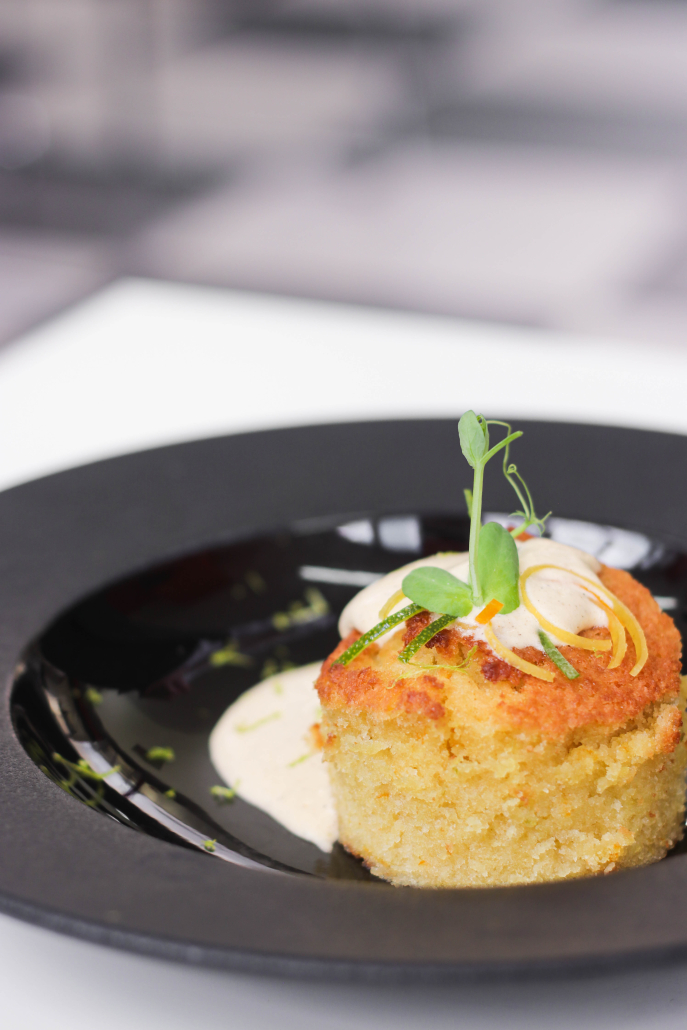
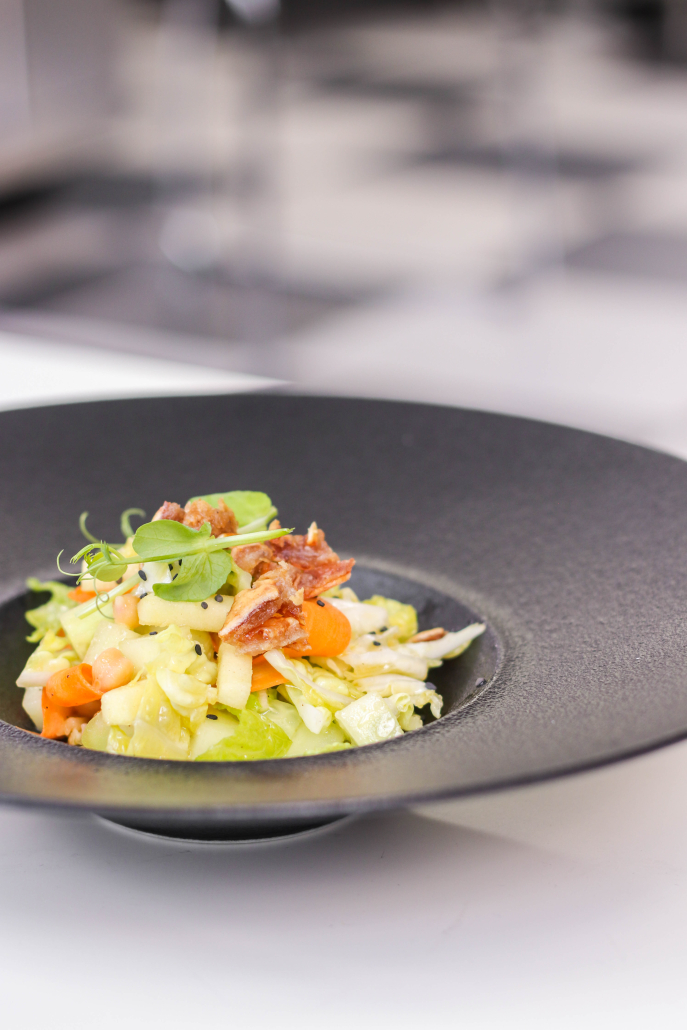
I’ll start with a kale salad featuring green apple, chickpeas, cucumber, and carrots, dressed with an Asian-inspired vinaigrette. After roasting the pork, I’ll use the crispy skin as a crouton on top of the salad. The main course will include jasmine rice and wok-fried vegetables such as bok choy, kale, and broccoli with simple seasoning. I’ll leave the pork uncovered in the refrigerator overnight so the skin dries out and becomes extra crispy when roasted. I’ll season it with Chinese five-spice and black pepper, and I’m planning to make my own hoisin sauce. For dessert, I’m making a citrus olive oil cake. I’ve blanched several citrus fruits and left them in a simple syrup to remove the bitterness. I’m still deciding whether to serve it with vanilla
mascarpone on the side.
How will you pair the wine?
I’ll pair the wine with the main course. We’re serving a dry Riesling, which should complement the pork, the apples in the salad, and the crispy pork skin very well.
What is your favorite dish to prepare?
I love making sushi. I prepare it at home all the time.
What cuisine or cooking technique inspires you the most?
Japanese cuisine is probably my biggest inspiration. One cooking technique I always come back to is brining chicken. Leaving it in salted water for a few hours before roasting makes a huge difference. It’s simple, but incredibly effective.
What practical advice would you give to aspiring chefs?
Don’t buy too many knives when you’re just starting out. I remember wanting every knife I saw, but you really don’t need them. A chef’s knife, a utility knife, and a paring knife are enough for most beginners. Unless you’re regularly deboning fish or doing very specialized work, there’s no need to own dozens of knives. It’s also important to understand the difference between German and Japanese knives. Japanese knives are sharper but generally more delicate. I used to break down lobsters with
a Japanese knife, and it wore the blade out much faster than if I had used a German knife. Take the time to learn what each knife is designed for, and always hold one in your hand before buying it. The right knife should feel comfortable, balanced, and suited to the way you cook.